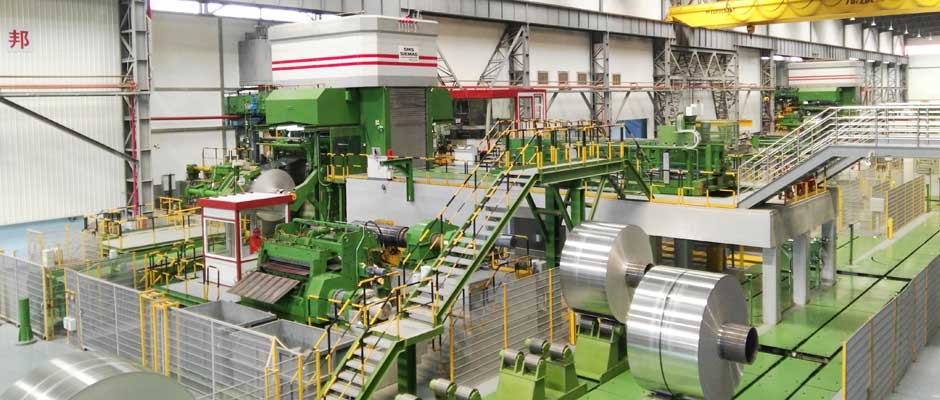
As of August 2026, the industrial-grade 6mm-50mm thick aluminum sheet price FOB at Chinese ports was $3750-$4650/ton, while the price range for ultra-thick aluminum sheets (50mm-200mm) was $4450-$5500/ton. All compliant products are priced based on the LME spot aluminum ingot price plus processing fees. As an aluminum sheet exporter who has long dealt with overseas structural component and mold customers, we have observed a common misconception: many buyers assume that the thicker the aluminum plate, the more material is used, and the cheaper the processing fee. In reality, the opposite is true—for ultra-thick aluminum plates exceeding 50mm, the rolling difficulty and quality inspection costs increase progressively with thickness, resulting in processing fees that are more than 50% higher than for conventional medium aluminum plates.
LME aluminum ingot prices account for approximately 75% to 82% of total costs, making them the primary driver of price fluctuations. The industry’s standard pricing logic is “LME spot aluminum ingot monthly average price + hot-rolling processing fee.” Thick aluminum sheets are primarily produced using hot-rolling, which consumes a large amount of raw materials, making the aluminum price transmission effect more significant than that of cold-rolled thin aluminum sheets: for every $100/ton fluctuation in aluminum ingot prices, the price per ton of thick aluminum sheets fluctuates by approximately $78-82. According to the latest market data in August, the LME spot aluminum monthly average settlement price was approximately $3220/ton, fluctuating between $3180 and $3260/ton, corresponding to a rise and fall in the benchmark price of thick aluminum sheets. For engineering clients making long-term bulk purchases, the industry typically adopts two models: “monthly average price settlement” or “locked-in long-term contracts.” The latter allows for locking in prices 3-6 months in advance, mitigating volatility risk, and is a preferred cooperation method for overseas engineering clients.
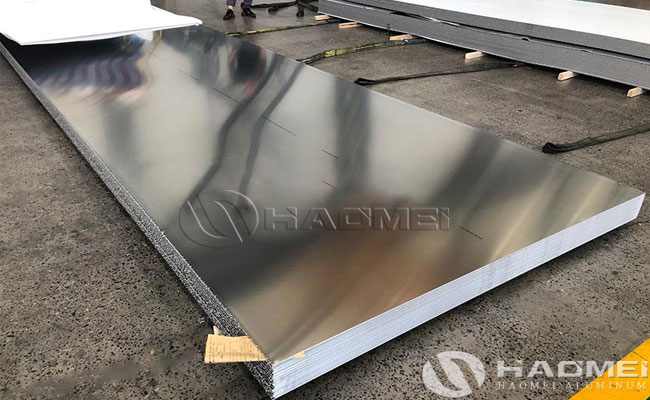
The alloy system and thickness determine the processing fee level, which is also the core reason for price differences for the same thickness. For conventional 6mm-50mm hot-rolled thick aluminum sheets, the processing fee for 1060 pure aluminum sheets is approximately US$530-680/ton, corresponding to an FOB total price of US$3750-3900/ton; the processing fee for 3003 rust-proof aluminum thick sheets is approximately US$630-780/ton, with a total price of US$3850-4000/ton; the processing fee for 5052/5083 marine thick aluminum plates is approximately US$880-1180/ton, with a total price of US$4100-4400/ton, depending on the alloy composition and basic flaw detection requirements; and the processing fee for 6061-T6 mold thick aluminum plates, which require solution treatment and aging, is approximately US$980-1430/ton, with a total price of US$4200-4650/ton. For thicknesses exceeding 50mm, processing fees increase by 15% to 20% for every 20mm increase in thickness. Processing fees for 6061 ultra-thick aluminum plates over 100mm can reach over $1750/ton, with the total price exceeding $4950/ton. The core reason is that ultra-thick aluminum plates require multiple passes on a large-tonnage hot rolling mill and necessitate a full-width ultrasonic flaw detection process, resulting in significantly higher production cycles and quality control costs compared to conventional medium-thick aluminum plates.
Hidden additional services also directly impact the final price; therefore, technical standards must be clearly defined in advance during procurement. The default thickness tolerance for ordinary hot-rolled thick aluminum sheets is ±0.3mm. If precision milling of all six sides is required, with tolerances controlled within ±0.1mm, the processing fee will increase by an additional $300-$500 per ton. Marine grade thick aluminum plates certified by classification societies require a third-party flaw detection report, adding another $150-$250 per ton. For fixed-length cutting, thick aluminum plates require carbide sawing, with unit cutting costs 2-3 times that of thin aluminum sheets; small-batch fixed-length cutting will incur an additional $80-$150 per ton.
Based on our experience dealing with clients, the hidden risks of low-priced thick aluminum sheets are most easily overlooked. Some suppliers quote $200-$300 per ton lower than the market price, but in reality, they use cast-rolled billets instead of hot-rolled billets, which are prone to internal delamination and inclusion defects, posing safety hazards when used in load-bearing structural components. Others use the lower limit thickness, nominally 10mm but actually only 9.2mm; while seemingly cheaper per ton, the unit cost is actually higher when calculated based on actual volume.
Haomei Aluminum’s entire range of thick aluminum sheets is produced from hot-rolled billets, covering a thickness range of 6mm to 200mm. We support customized services such as ultrasonic testing, precision milling, and length cutting. Production strictly adheres to ASTM B209 standards, and each batch comes with a complete material testing report. We insist on transparent pricing and do not offer non-standard products as a low-price lure, helping overseas clients achieve precise cost control in thick plate procurement while ensuring quality.