
As a supplier deeply involved in the aluminum sheet export sector, we understand that HS codes are the “identity card” of cross-border trade, directly impacting customs clearance efficiency, tariff costs, and compliance risks. The HS code (Harmonized Commodity Description and Coding System) is a globally unified commodity classification standard. Aluminium sheet HS code primarily fall under Chapter 76, “Aluminum and its articles,” with core codes concentrated in 7606 (aluminum sheets, plates, and strips with a thickness > 0.2 mm) and 7607 (aluminum foil with a thickness ≤ 0.2 mm). Accurate classification is fundamental to export operations.
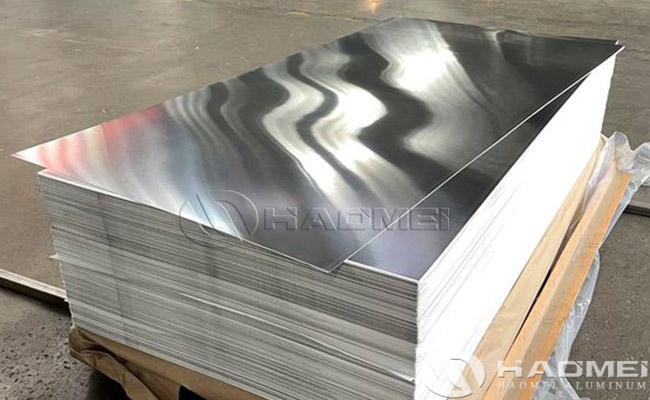
The core HS code system for aluminum sheets is clear, categorized hierarchically by material, shape, and thickness, facilitating quick identification of the applicable code. Under Chapter 76, 7606 is the core code for aluminum sheets. The first digit, “1,” represents non-alloy aluminum, and “2” represents aluminum alloy; the second digit, “1,” represents rectangular (including square), and “9” represents non-rectangular; subsequent digits further subdivide according to thickness. For example, 760611 is a non-alloy rectangular aluminum sheet, 760612 is an aluminum alloy rectangular aluminum sheet, 760691 is a non-alloy non-rectangular aluminum sheet, and 760692 is an aluminum alloy non-rectangular aluminum sheet, clearly categorizing and covering all mainstream aluminum sheet types.
Key coding subdivisions and judgment criteria are clearly defined, requiring precise matching of product parameters to avoid classification errors. Non-alloy aluminum sheets (such as 1060, 1070) are preferentially classified into 760611 (rectangular) or 760691 (non-rectangular); aluminum alloy sheets (such as 5052, 5083, 6061) are classified into 760612 (rectangular) or 760692 (non-rectangular). Thickness is a core judgment point: >0.2mm is classified into 7606, ≤0.2mm is classified into 7607 (aluminum foil); the distinction between rectangular and non-rectangular is based on the basic shape of the product, and sheet materials after being flattened from coils are usually classified as rectangular. Special specifications, such as aluminum alloy plates with a thickness greater than 4mm, correspond to code 7606129000 and require special labeling to ensure compliance.
Complete and accurate export declaration elements for aluminum plates are crucial for code compliance. Core declaration elements include: product name, brand type, export preferential treatment status, material (non-alloy/aluminum alloy), shape (rectangular/non-rectangular), thickness, condition (rolled/heat-treated), dimensions, and intended use. In practice, it is essential to ensure consistency across the three documents—customs declaration, invoice, and packing list—to avoid classification disputes due to ambiguous parameters. For example, when declaring 5083 marine aluminum alloy plates, it is necessary to clearly label them as “made of aluminum alloy, rectangular, 6mm thick, solution heat-treated, used in shipbuilding,” providing complete evidence for customs classification.
Common classification errors should be carefully avoided to reduce export compliance risks. The most common mistake is confusing the thickness boundary between aluminum sheets and aluminum foil, misclassifying 0.25mm aluminum sheets as 7607 (aluminum foil), or vice versa. Secondly, ignoring material distinctions leads to classifying aluminum alloy sheets as non-alloy aluminum sheets, resulting in discrepancies in tariffs and tax refunds. Another error is shape determination, misclassifying leftover material from rectangular sheet cutting as non-rectangular. Avoidance methods: Strictly classify according to actual product parameters, referring to customs tariff notes when necessary, or applying for pre-classification services to ensure coding accuracy.
As a professional aluminum sheet exporter, we provide full-process support for coding compliance, helping clients clear customs efficiently. Based on years of export experience, we have established a comprehensive coding database that can quickly match accurate HS codes based on client product parameters (material, thickness, shape, application) and provide compliance declaration suggestions. Simultaneously, we assist clients in preparing complete declaration documents to ensure compliance with target market customs requirements, avoiding customs delays or increased costs due to coding issues. Choosing us means not only obtaining high-quality aluminum sheets but also enjoying professional coding and compliance services, making cross-border trade smoother.