In industrial applications, common aluminum sheet metal are categorized into five major series based on their alloy systems. Each grade possesses distinct performance characteristics—determined by the specific proportions of alloying elements—that cater to a wide range of applications, from light-industrial decorative uses to high-end structural components. Selecting the right material is critical, as it directly impacts the service life of the finished product and the total procurement cost. By referencing ASTM standards and industry best practices, we can systematically outline the characteristics and suitable applications for the most common alloy grades.
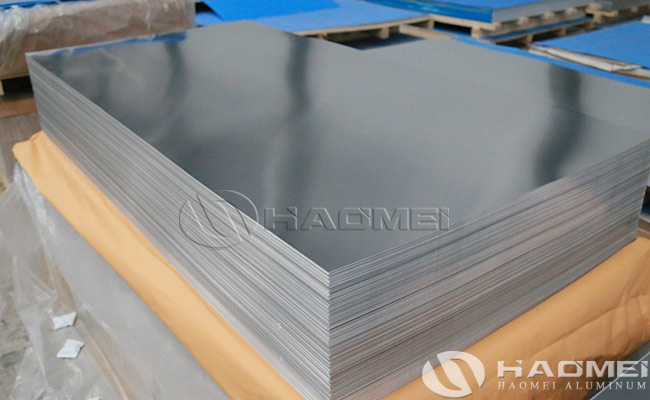
The 1000 series consists of pure aluminum sheets, representing the highest-purity base materials available; common grades include 1060 and 1050. These sheets contain at least 99.50% aluminum, leveraging the inherent properties of pure aluminum to provide excellent electrical and thermal conductivity, as well as resistance to atmospheric corrosion. While they cannot be strengthened through heat treatment—resulting in lower mechanical strength—they offer exceptional formability. For instance, 1060-O aluminum sheet has a tensile strength of 60–95 MPa, an elongation of ≥25%, an electrical conductivity of approximately 60% IACS, and a thermal conductivity of 234 W/(m·K). These aluminum sheets are widely used in applications such as LED heat-dissipation substrates, anti-corrosive linings for chemical equipment, food packaging containers, and decorative signage, serving as the most cost-effective, general-purpose pure aluminum material.
The 3000 series—aluminum-manganese “rust-proof” (corrosion-resistant) alloys—represents a primary category for general industrial use, with 3003 being the most prominent grade. This series incorporates 1.0%–1.5% manganese to achieve dispersion strengthening, resulting in a strength approximately 30% higher than that of 1000-series pure aluminum. It retains excellent corrosion resistance and weldability and is classified as a non-heat-treatable alloy. In the 3003-H14 aluminum sheet, it exhibits a tensile strength of 130–180 MPa, a yield strength of ≥115 MPa, and an elongation at break of ≥8%; it can remain stable for over five years in neutral salt spray environments. Widely used in applications such as architectural roofing and cladding, ventilation ducts, freezer liners, and electrical enclosures, it offers an optimal balance of corrosion resistance and cost-effective processing, making it the most extensively used type of corrosion-resistant aluminum sheet globally.
The 5000-series aluminum-magnesium alloys are the primary choice for medium-strength, corrosion-resistant applications, with 5052 and 5083 being the most representative grades. In 5000 series, magnesium serves as the principal strengthening element; varying the magnesium content—from 2.2% to 4.9%—creates a gradient in strength, with higher magnesium content yielding greater strength and superior resistance to salt spray. In the 5052-H32 aluminum sheet, the alloy offers a tensile strength of 215–265 MPa, a yield strength of ≥160 MPa, and an elongation at break of ≥7%, making it suitable for inland outdoor equipment, automotive sheet metal, and atmospheric storage tanks. In the 5083-H116 aluminum sheet, it provides a tensile strength of 310–360 MPa and a yield strength of ≥215 MPa; its exceptional resistance to seawater corrosion makes it the specified material for ship hull plating, offshore platform structures, and shipping containers.
The 6000-series aluminum-magnesium-silicon alloys—a heat-treatable category—are versatile materials well-suited for both structural and manufacturing applications, with 6061 being the most representative grade. This series achieves heat-treatment strengthening through the precipitation of magnesium-silicon phases, offering an optimal balance of strength, machinability, and surface finish quality. In the 6061 T6 aluminum sheet, it exhibits a tensile strength of 260–320 MPa, a yield strength of ≥240 MPa, and a Brinell hardness of 85–95 HB, with a machining efficiency over 30% higher than that of steel. It is widely used for precision tooling and molds, frames for automated equipment, structural components for new energy vehicles, and architectural decorative elements, serving as a standard, versatile material for industrial lightweighting applications.
The 7000-series (Al-Zn-Mg-Cu) high-strength aluminum alloys—exemplified by the 7075 grade—are specialized materials designed for high-end, heavy-duty applications. Through the combined strengthening effects of zinc, magnesium, and copper, these alloys achieve ultra-high strength; in the T6 condition, they offer a tensile strength exceeding 505 MPa and a yield strength of ≥435 MPa. With a specific strength far surpassing that of standard low-carbon steel, they are essential materials for the aerospace industry, high-end molds, and structural components for racing vehicles.
Based on extensive supply experience, there is no need to blindly pursue the highest-strength grades. For general aluminum sheet metal applications in inland regions, the 3003 alloy is typically sufficient; for outdoor use in coastal areas, 5052 is the preferred choice, while 6061 is well-suited for load-bearing structural applications. Selecting the right material can reduce procurement costs by 10%–20%. Haomei Aluminum maintains a large, readily available stock across five major aluminum alloy series, covering a full thickness range from 0.2 mm to 200 mm. All products are manufactured in strict accordance with international ASTM and EN standards, with comprehensive test reports provided for every batch. We also offer expert material selection guidance and customized processing services tailored to the specific operational requirements of our clients.