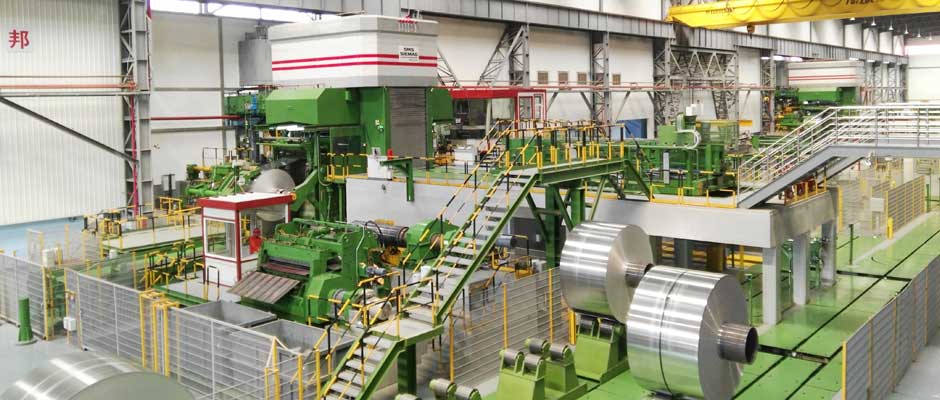
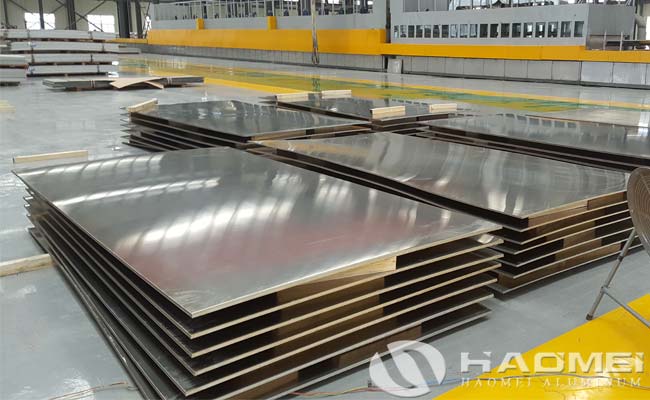
Hot rolled aluminum sheets are produced from aluminum ingots or cast slabs through a series of processes, including heating, hot rolling, straightening, and sawing. Compared to standard cast-rolled aluminum sheets, hot-rolled aluminum sheets feature a more uniform microstructure, greater internal density, and superior suitability for further processing. They are particularly well-suited for industrial applications that demand specific thickness, precise plate shape, excellent deep-processing capabilities, and high mechanical performance.
China hot rolled aluminum sheets are widely used in sectors such as mechanical manufacturing, mold-making, transportation, shipbuilding, pressure vessels, architectural curtain walls, tank construction, electronic equipment, and deep-stamping applications. The final properties of hot rolling aluminum sheets depend heavily on the alloy composition, temper, thickness, heat treatment regimen, and the specific technical standards applied.
Common Alloys for Hot-Rolled Aluminum Sheets:
– 1xxx Series:
Includes 1050, 1060, 1070, and 1100. These alloys offer high electrical and thermal conductivity along with excellent corrosion resistance; they are frequently used in chemical processing equipment, electrical components, reflective materials, and general stamped parts.
– 3xxx Series:
Includes 3003, 3004, and 3105. Primarily Al-Mn alloys, these provide higher strength than pure aluminum, along with good formability and corrosion resistance. They are commonly used for storage tanks, architectural panels, cookware, and interior components for vehicles.
– 5xxx Series:
Includes 5052, 5083, 5086, and 5754. These alloys are characterized by excellent resistance to seawater corrosion, superior weldability, and strength levels ranging from moderate to high. Among these, 5083 and 5086 are commonly used in shipbuilding, marine engineering, tank trucks, and welded structural components.
– 6xxx series:
Alloys such as 6061, 6063, and 6082 are heat-treatable, offering a balance of strength, corrosion resistance, and machinability. 6061-T6 and 6082-T6 hot-rolled aluminum plates are frequently used for mechanical parts, mold base plates, automation equipment, and structural components in transportation.
Common Specifications and Tempers:
China aluminum sheet suppliers produce hot-rolled aluminum sheets, thick plates and coils. Typical thicknesses range from approximately 2.0 mm to over 200 mm, with widths including 1000 mm, 1220 mm, 1250 mm, 1500 mm, and 2000 mm. Availability of extra-wide or custom-sized plates should be confirmed based on specific production equipment capabilities.
Common tempers include:
O: Annealed—suitable for bending, stretching, stamping, and similar forming processes.
H111 / H112: Strain-hardened (lightly) following hot working—commonly used for thick plates and welded structures.
H32 / H34: Applicable to certain 3xxx and 5xxx series alloys.
T4 / T6 / T651: Typically used for 6xxx series alloys—suitable for mechanical machining and structural applications requiring high strength.
Specific requirements regarding thickness tolerances, flatness, mechanical properties, and surface quality should be defined according to EN, ASTM, or GB/T standards, the Material Test Certificate (MTC), and the technical procurement agreement.
Key Considerations for Purchasing Hot-Rolled Aluminum Sheets
When sourcing hot-rolled aluminum sheets from China, it is advisable to clearly specify the alloy grade, temper, dimensions, intended application, and any planned downstream processing. For instance, marine-grade aluminum plates typically require specific corrosion resistance properties and relevant certifications (such as 5083-H116/H321), whereas plates intended for molds or machining prioritize factors like thickness tolerance, residual stress control, and the quality of saw-cut edges (e.g., 6061-T651).
It is also essential to specify surface requirements—such as milled surfaces, single- or double-sided protective film, brushed or polished finishes, or standard industrial-grade surfaces. Furthermore, if the material is intended for laser cutting, bending, welding, or anodizing, the specific processing method should be disclosed in advance to ensure the selection of the appropriate alloy temper.
Regarding packaging, hot-rolled aluminum sheets destined for export are typically protected with moisture-proof paper, plastic film, and edge protectors, and are secured on wooden pallets or in wooden crates. For shipments by sea, particular attention must be paid to moisture and salt-spray protection, as well as container loading methods, to prevent oxidation, surface scratches, or damage to the plate edges during transit.
Haomei Aluminum offers a wide range of China hot-rolled aluminum sheets—including the 1xxx, 3xxx, 5xxx, and 6xxx series—as well as thick aluminum plates and cut-to-size products. We provide expert guidance to help you determine the optimal alloy, temper, dimensional tolerances, and export packaging specifications tailored to your specific application.